Tar and gravel, modified bitumen, TPO and EPDM. We repair and replace flat roofs on houses, two-flats, condominium and apartment buildings, and commercial buildings across Cook, Lake and DuPage Counties, from our base in Mount Prospect.
A flat roof is mostly edges. Walls, parapets, drains, curbs, vents and the line where a flat section meets a pitched roof are where nearly every flat roof leak starts, whether the roof is a 300 square foot porch or a 20,000 square foot building. We start every job by finding where the water is actually getting in, then decide whether the roof needs a repair, a section rebuilt, or a new system.
You get a written estimate that names the system, the thickness, how it is attached, the flashing details and the warranty, so you can compare it line by line with anyone else's.
Layers of felt and hot asphalt, usually covered with gravel. Still common on older two-flats, apartment buildings and commercial roofs. We repair them where the problem is local and replace them when the felts have dried out across the roof. Removing the gravel is the first step of any replacement: see roof gravel removal and what comes off first when a gravel roof is replaced.
Two or three plies of polymer-modified asphalt with a granulated cap. Tough under foot traffic and forgiving at edges, which makes it a strong choice for garages, porches, additions and busy commercial roofs. Details on our modified bitumen page.
A white single-ply membrane with heat-welded seams. Economical on larger open roofs and reflective, which matters inside the City of Chicago, where the energy code expects reflective low-slope roofs on most replacements. See how long a TPO roof lasts.
A durable synthetic rubber membrane with a long track record. Simple to repair, dark in color. Compared in EPDM vs TPO and torch-down vs TPO.
A fluid-applied coating can add years to a membrane that is worn but still dry underneath. It is the wrong answer over wet insulation. We core the roof before recommending one: roof coatings and when a coating is right and when it isn't.
Most flat roof repairs we do run $300 to $10,000. Commercial and multi-family replacements typically run $25,000 to $75,000. Your estimate is written after we have been on the roof.
Homeowners. Rear additions, porches, garages, dormer tie-ins, and two-flats and mid-century homes with fully flat roofs. Small roofs with a lot of edge, where careful flashing matters more than anything.
Condominium and apartment buildings. Boards get a written condition report with photos and a scope they can bid out. See our condo and HOA roof decision guide.
Commercial buildings. Retail, office, restaurant, light industrial and warehouse roofs, plus commercial leak repair and maintenance plans. More on our commercial roofing page.
Inside Chicago. We work the Far Northwest Side under our Chicago general contractor license: Far Northwest Side roofing.
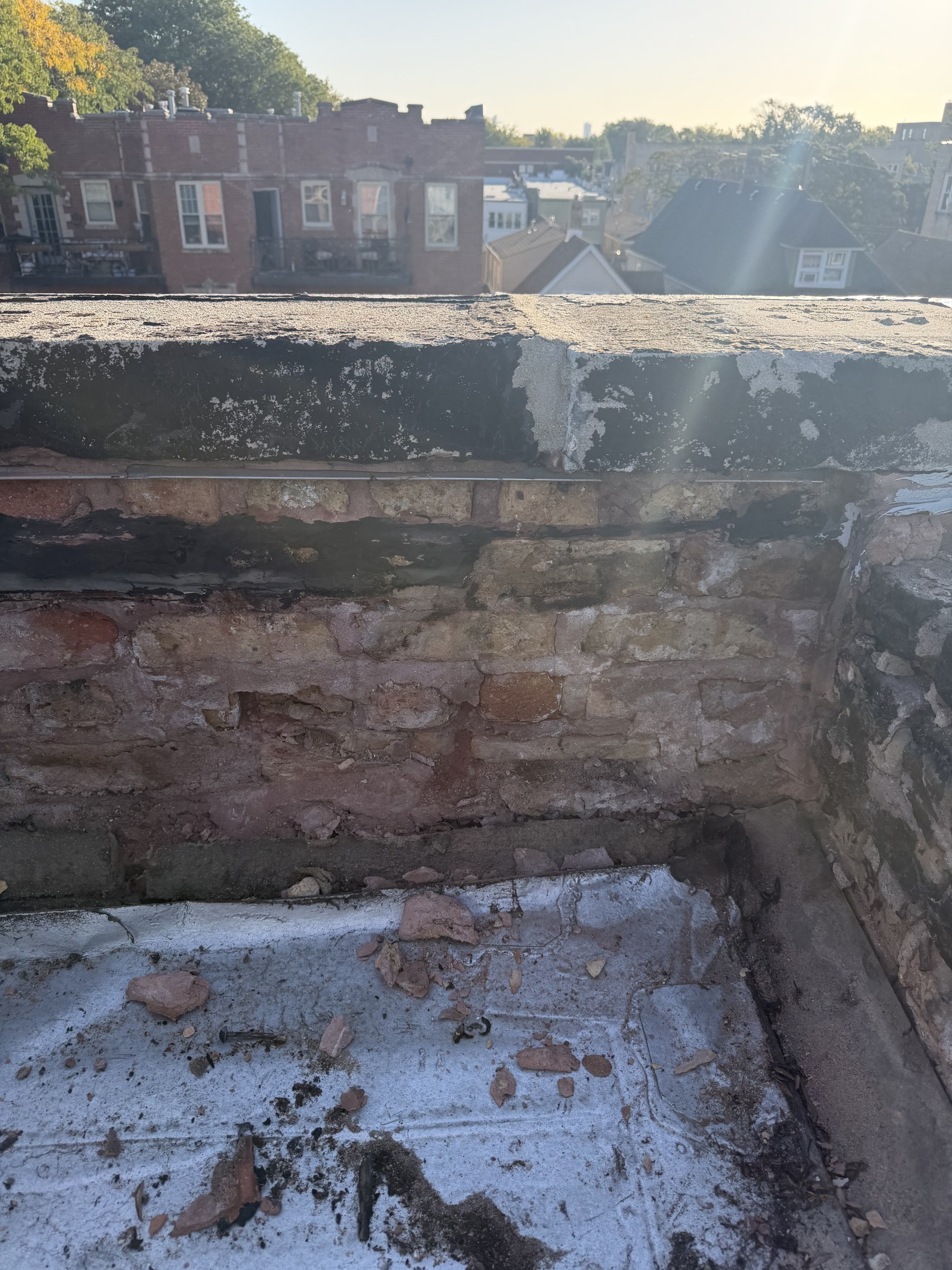
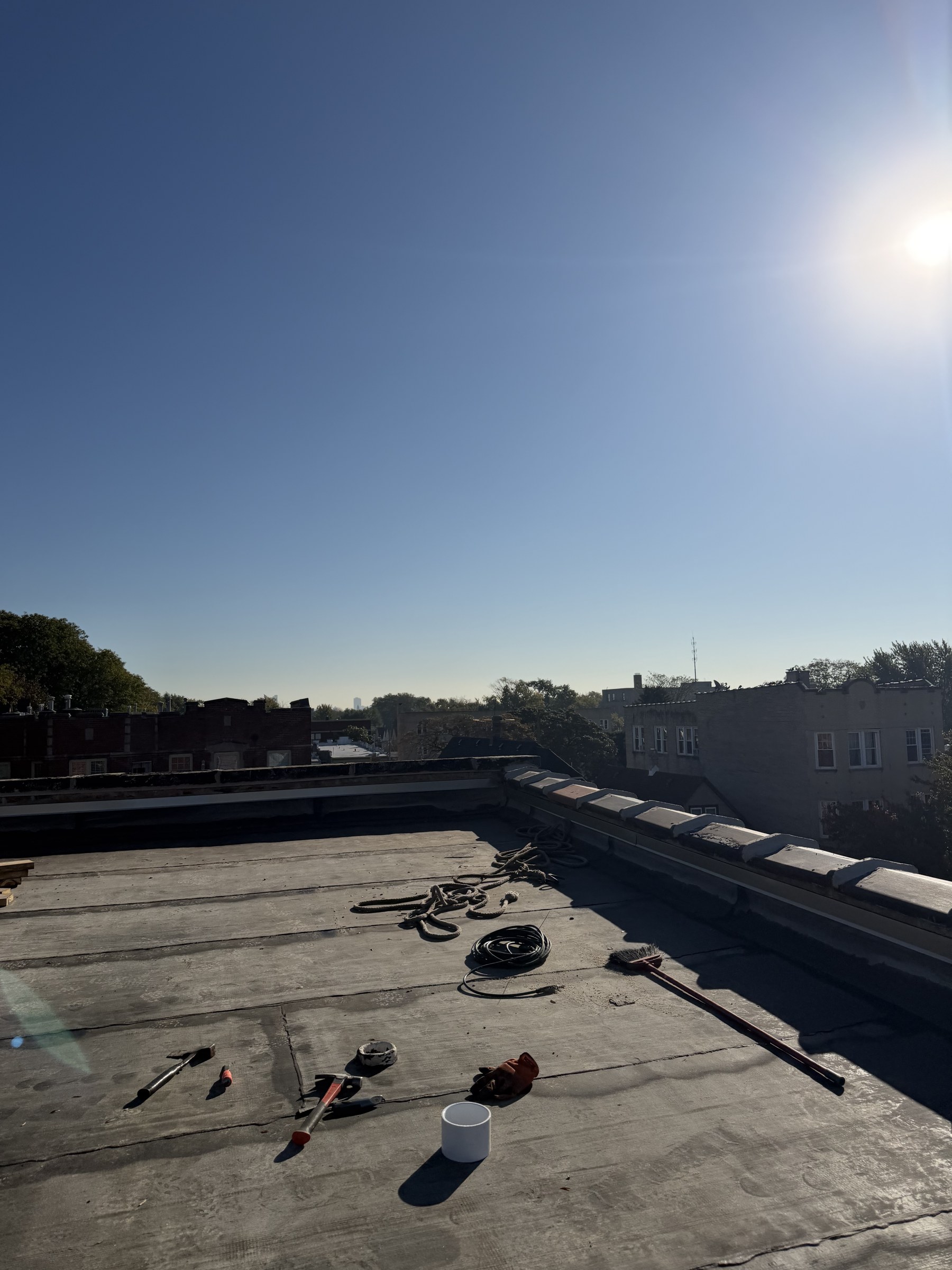
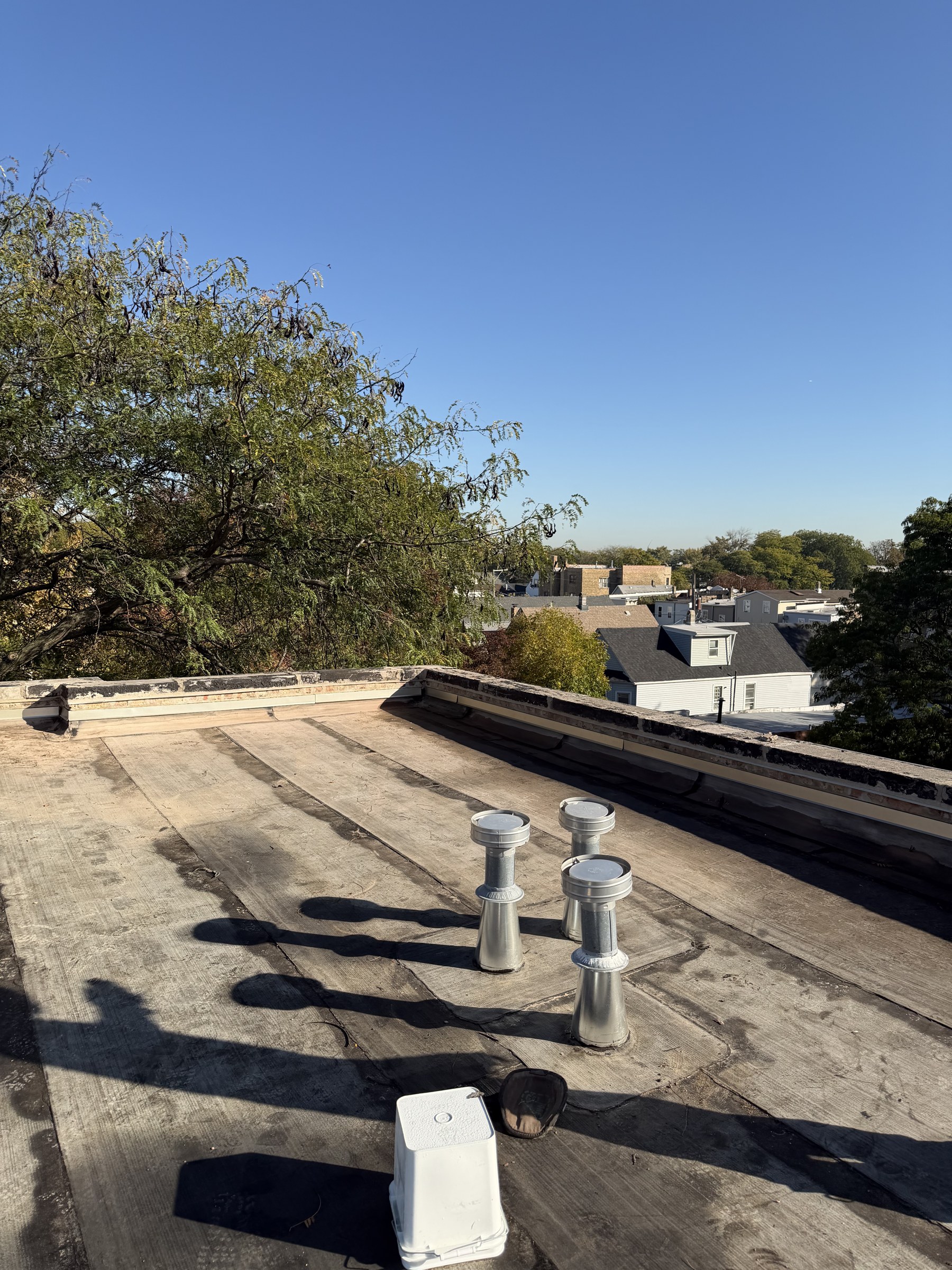
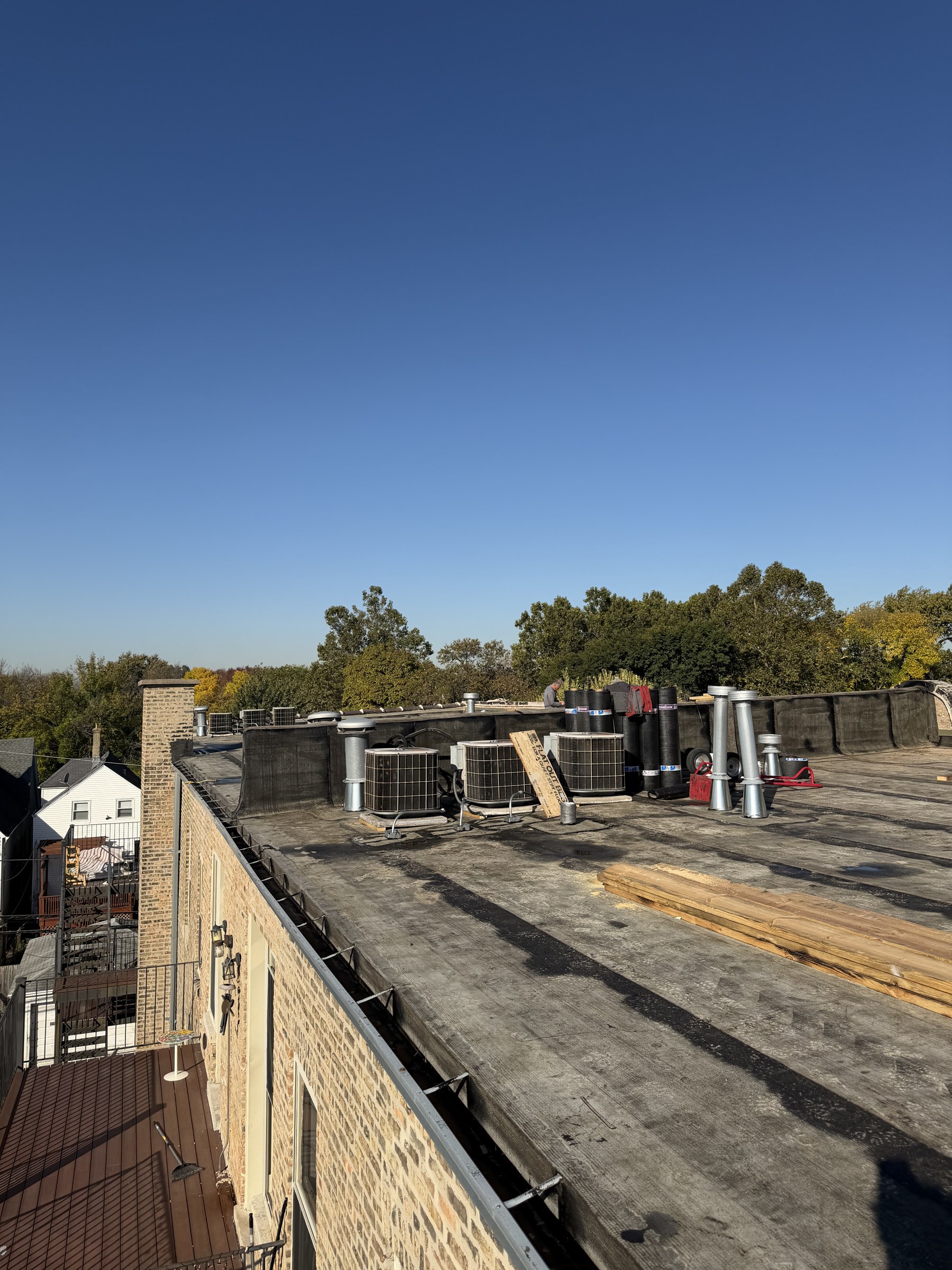
A roof recover on a twelve-unit condominium building in Irving Park, finished October 2026. The roof is a common element of the association, so the job started with paperwork: the board's written approval and the City of Chicago building permit, which we pulled on the association's behalf under our Chicago general contractor license. A recover rather than a tear-off was the right call for this roof, so the existing low-slope roof stayed in place and got new insulation, a new modified bitumen membrane with a reflective coating, new flashings, and new metal counterflashing at the parapet walls, with deteriorated decking repaired where we found it. Beyond the roof itself, the association asked us to take care of several other things while we were there, and we did, each under its own signed proposal: masonry work on the chimney, the sewer vent extended to clear the new roof height, the east downspout replaced with a gutter extension, tree branches cut back off the roof, and the limestone parapet at the firewall ground out and repointed. The parapet brick is old odd-sized Chicago common, so matching replacement brick was sourced as a line item in its own right. Materials went up by crane. Permitted, inspected, and closed out with one invoice so the board had one balance to approve.
Full flat roof replacement for a returning customer in Chicago's Old Town neighborhood, one of several properties we've worked on with this owner over the years. Tore off the existing roofing and wood deck, then installed 2.6" ISO insulation, base and smooth modified bitumen, an aluminum reflective coating, and new galvanized scupper boxes.
Most flat roof repairs we do fall between $300 and $10,000. The low end is a single seam, a blister, or a failed flashing at a wall or a vent. The high end is cutting out and rebuilding a wet section of roof, insulation included, or re-flashing a long parapet. Full replacement of a commercial or multi-family flat roof typically runs $25,000 to $75,000 depending on size, tear-off layers and drainage work. We give a written estimate after looking at the roof, because the price depends on what is under the membrane, not just the area.
A tar roof usually means a built-up roof (BUR): layers of felt and hot asphalt or coal tar, often finished with gravel. Many Chicago-area two-flats, apartment buildings and older commercial buildings still have one. They can be repaired when the problem is local, such as a blister, a split at a wall, or a failed drain. Once the felts are dried out across the roof, water gets between the layers and patches stop holding, and replacement with modified bitumen or TPO is the better money. Gravel has to come off first; our roof gravel removal page explains how that works.
Roughly: built-up tar and gravel 20 to 30 years, modified bitumen 20 to 25 years, TPO 20 to 30 years, EPDM 25 to 30 years. Freeze-thaw cycling, ponding water and foot traffic shorten all of them. Most flat roofs fail at the edges first: walls, parapets, drains, curbs and penetrations. That is why flashing work matters more to the life of a flat roof than the brand of membrane.
It depends on the building. Modified bitumen handles foot traffic, rooftop equipment and small roofs with lots of edges well, so it suits garages, porches, additions, two-flats and busy commercial roofs. TPO is a white heat-welded membrane that is economical on large open roofs and reflects heat, which matters inside Chicago where the energy code expects reflective low-slope roofs. EPDM is a rubber membrane that is durable and simple but dark. We recommend one after seeing the roof, and we put the system, thickness and warranty in the written estimate.
Both. Most houses around Chicago have a flat or low-slope section somewhere: a rear addition, a porch, a garage, a dormer tie-in, or the whole roof on a two-flat or a mid-century home. These small roofs leak for the same reasons big ones do, at the edges. We also work on condominium and apartment buildings and on commercial buildings from strip centers to light industrial.
Emergency repairs, yes. We can stop an active leak in winter with materials rated for cold application. Full replacement is best done when the deck is dry, usually April through November, because torching or adhering a membrane over a wet or frozen deck traps moisture and causes blisters. If a roof needs replacing in winter, we patch it to get through and schedule the replacement for the first reliable dry stretch.
Water that is still standing 48 hours after rain is a problem. It speeds up membrane wear, adds weight, and finds every weak seam. The usual causes are a clogged or poorly placed drain, a sagging deck, or insulation that has compressed. The fix can be as simple as clearing a drain or adding a scupper, or it can mean tapered insulation during replacement. We note ponding on every inspection.
Yes. Multi-family flat roofs are a large share of the flat roof stock around Chicago. For associations we provide a written condition report with photos, a repair-or-replace recommendation, and a scope the board can compare against other bids. Our condo and HOA roof decision guide covers how boards usually approach it.
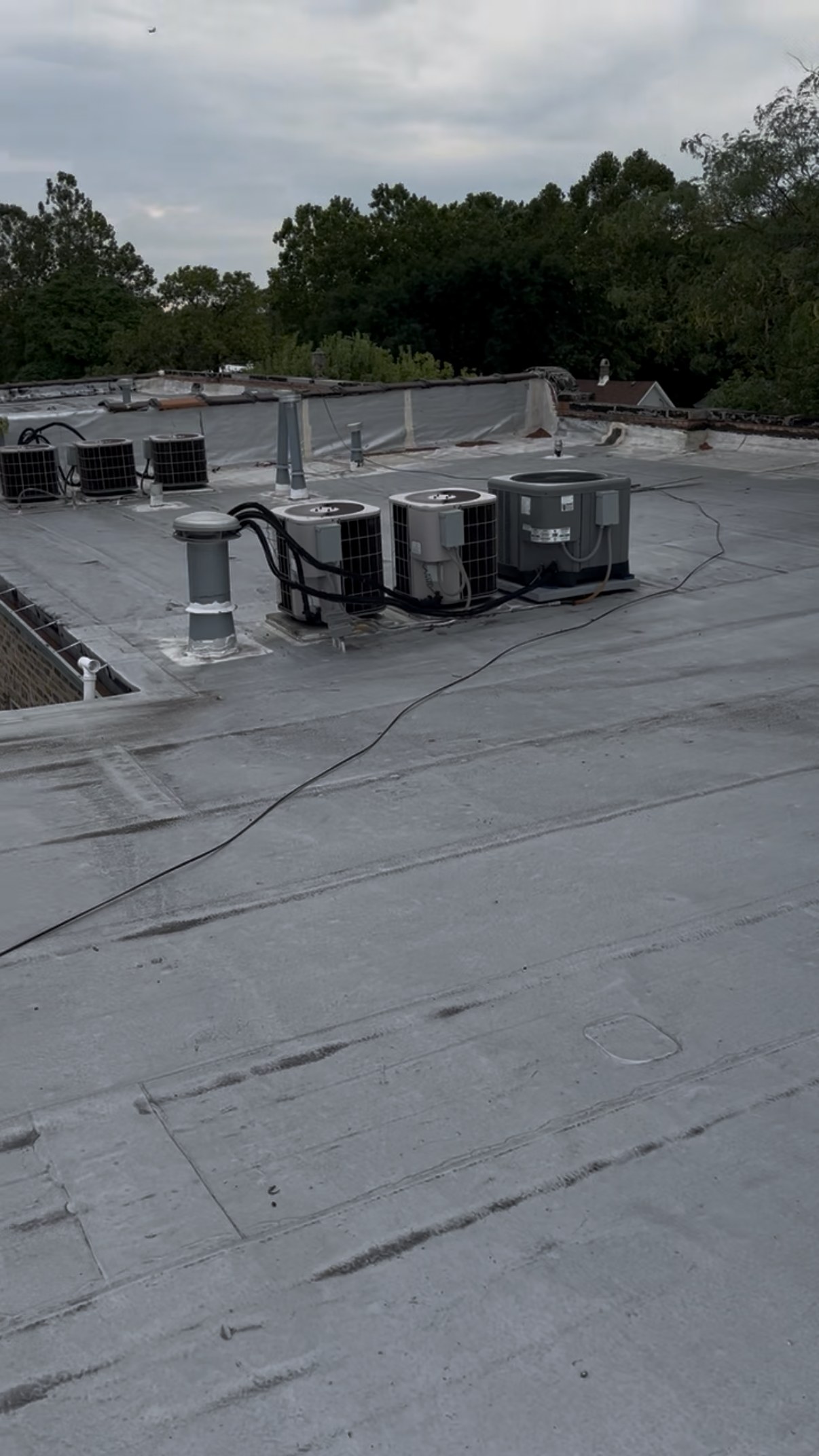
We find where the water is getting in, tell you whether it's a repair or a replacement, and put the system and warranty in writing.