On the Roof This Week: Flat Roof Replacement on N Sawyer Ave, Chicago
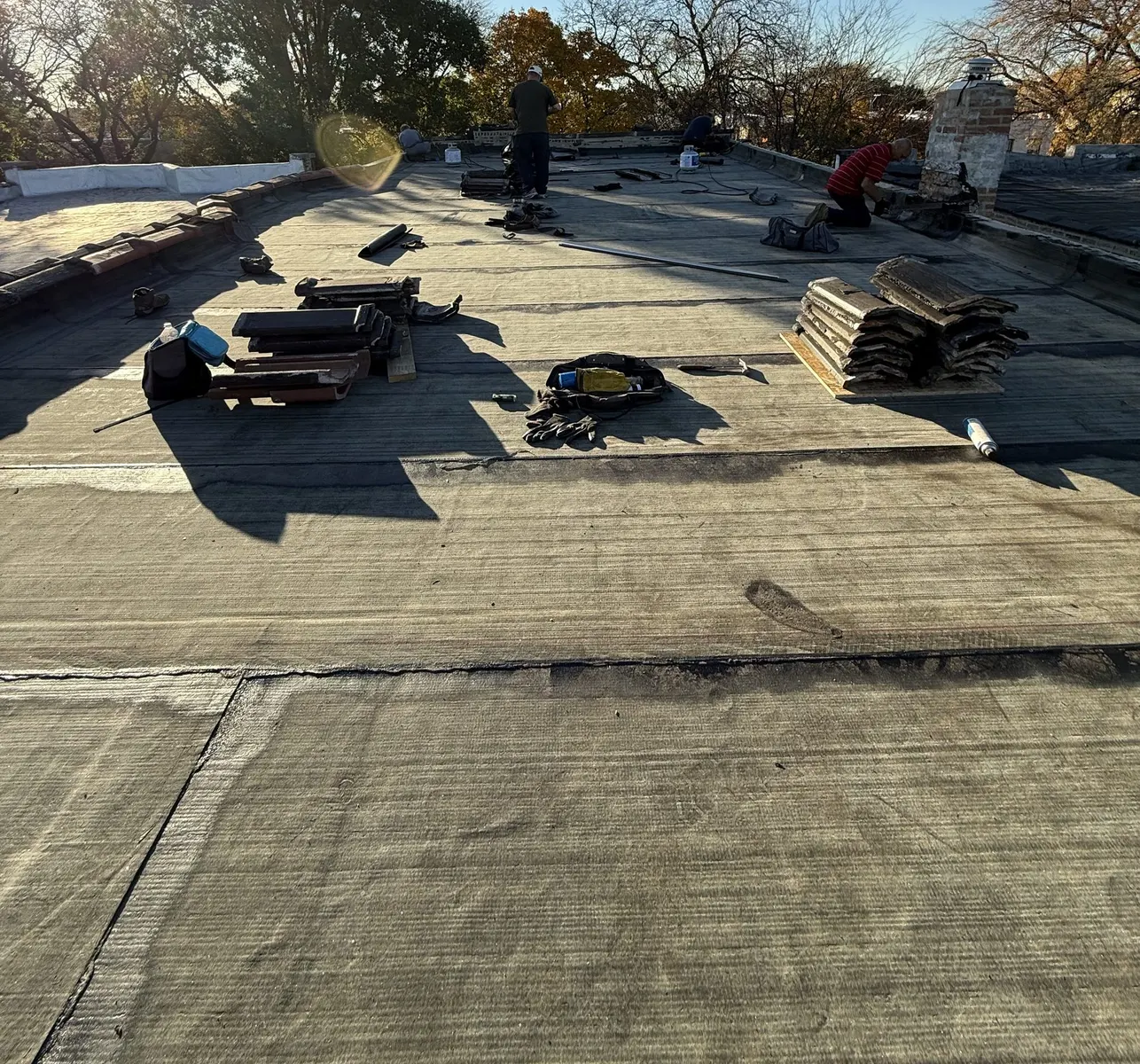
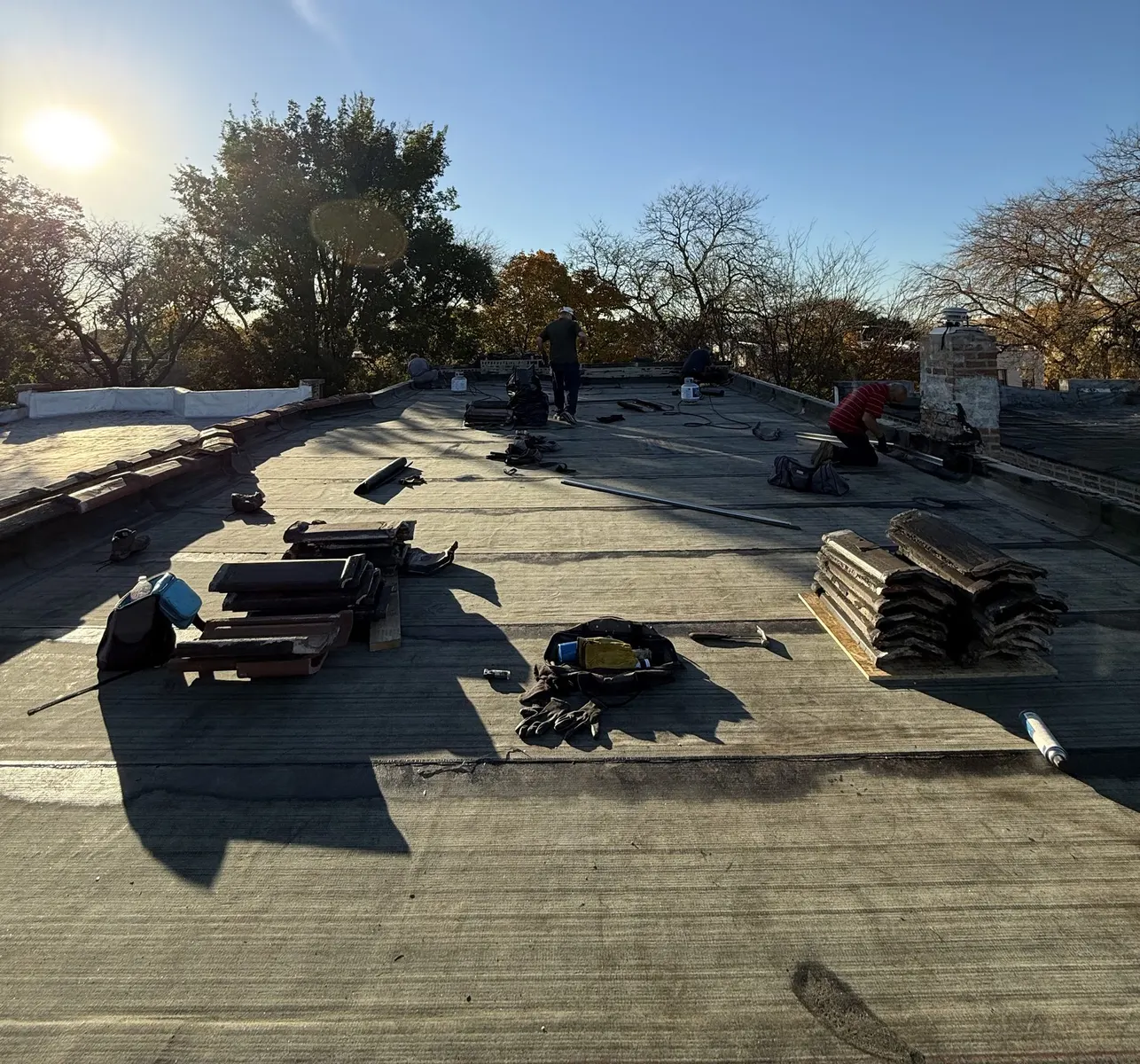
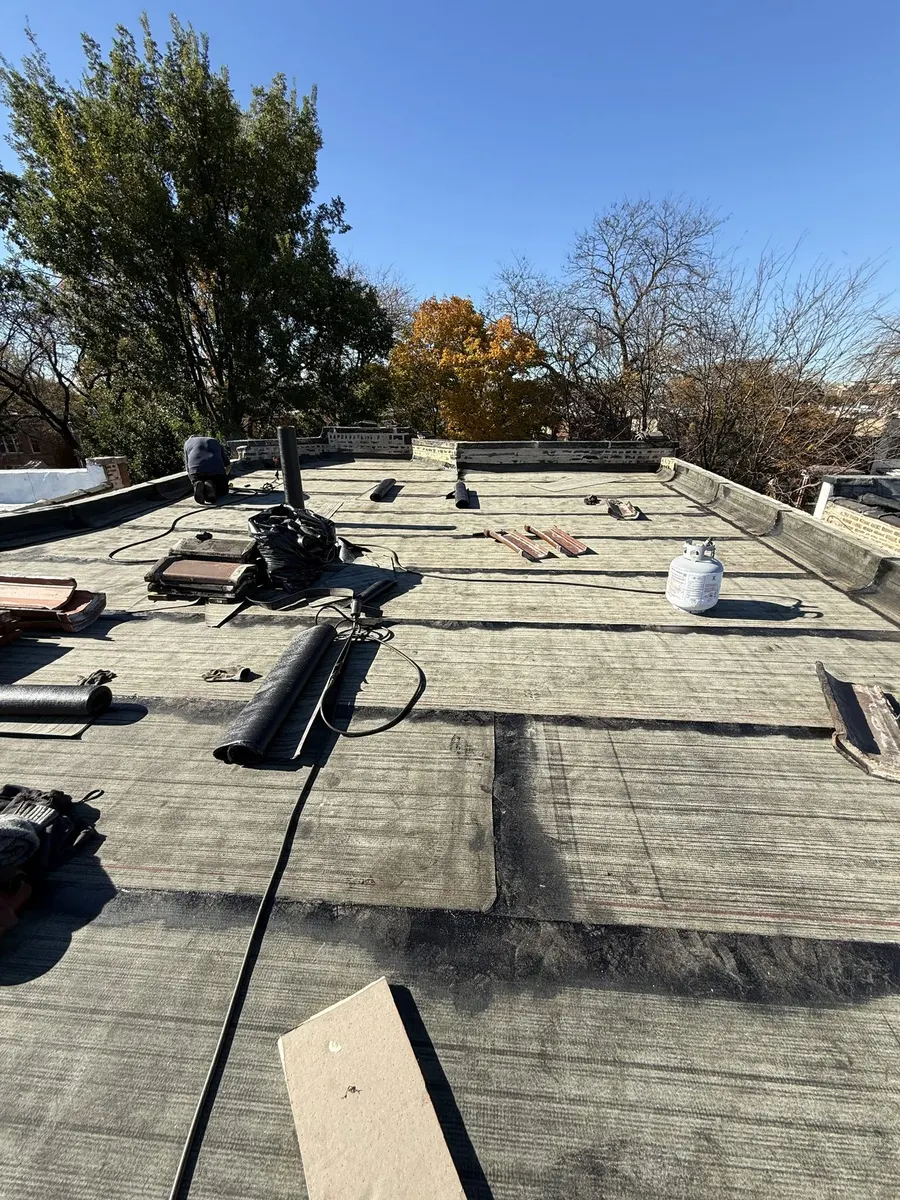
Day two on a Chicago flat roof: the old roof is off, the base sheet is down, the clay copings are stacked and waiting, and the modified bitumen rolls are staged. Here is what the job involves and why each step is there.
The building and the roof
A brick two-flat on N Sawyer Ave in Chicago's Irving Park neighborhood, with a low-slope roof running the full footprint and a brick parapet on three sides capped with clay copings. The old roof had reached the point where patching was no longer honest advice. The owner signed for a full replacement in October and the crew started Monday, November 9, while the weather still allows torch work.
What the scope includes
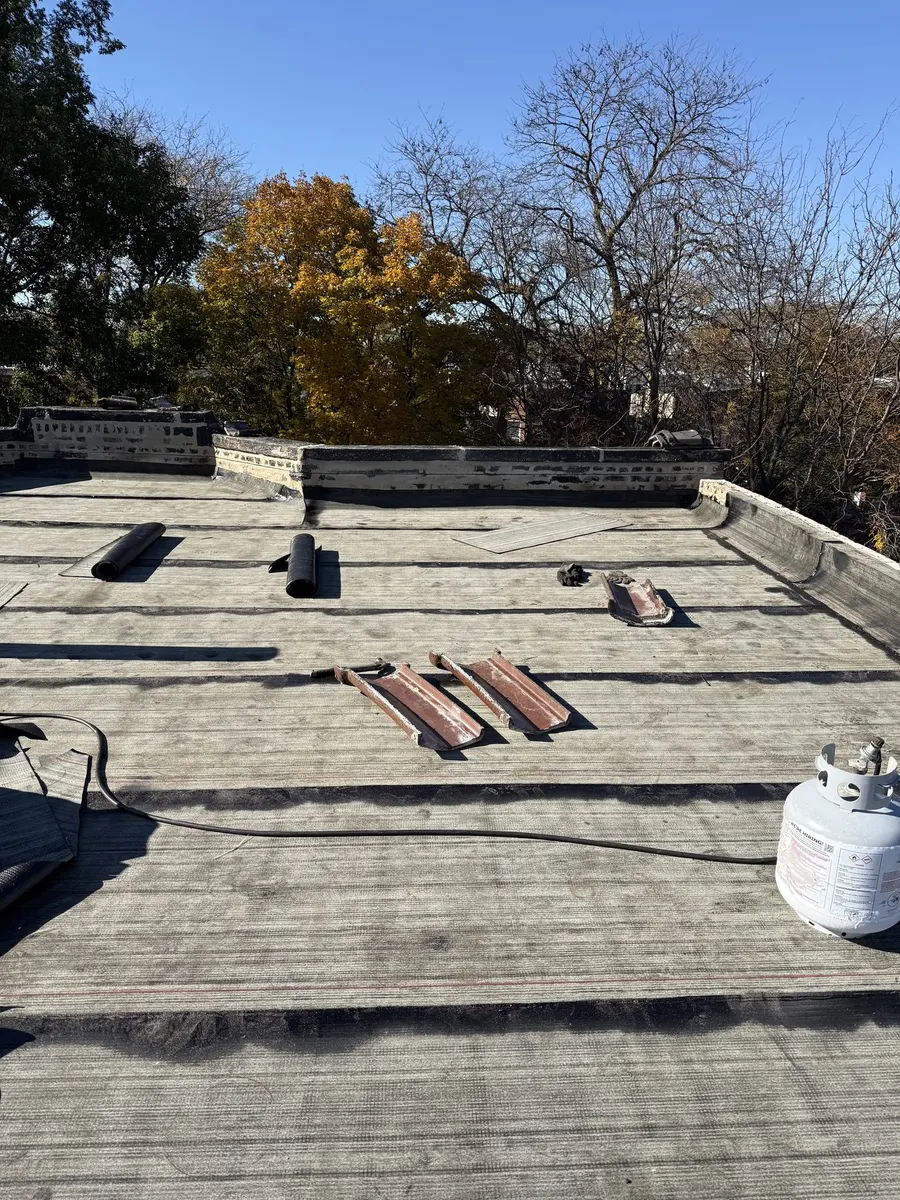
Full tear-off of the old roof down to the deck. One inch of polyiso insulation over the deck. A base sheet, then a torch-applied modified bitumen cap sheet. The clay copings on the parapet come off, the parapet gets flashed properly, and the copings go back on. A new galvanized gutter along the rear. A reflective aluminum coating over the finished membrane. All debris hauled, permit pulled with the City of Chicago, inspected at each stage.
Why the copings come off
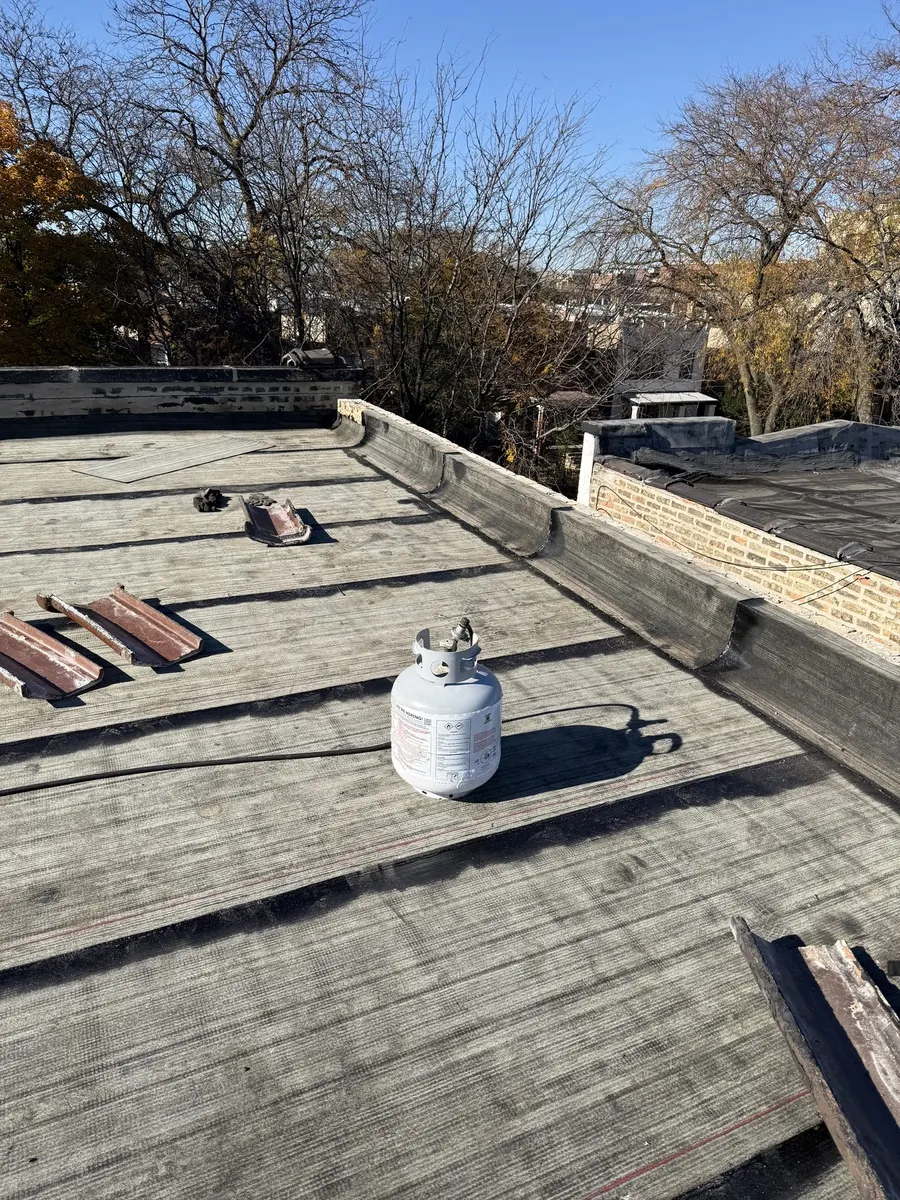
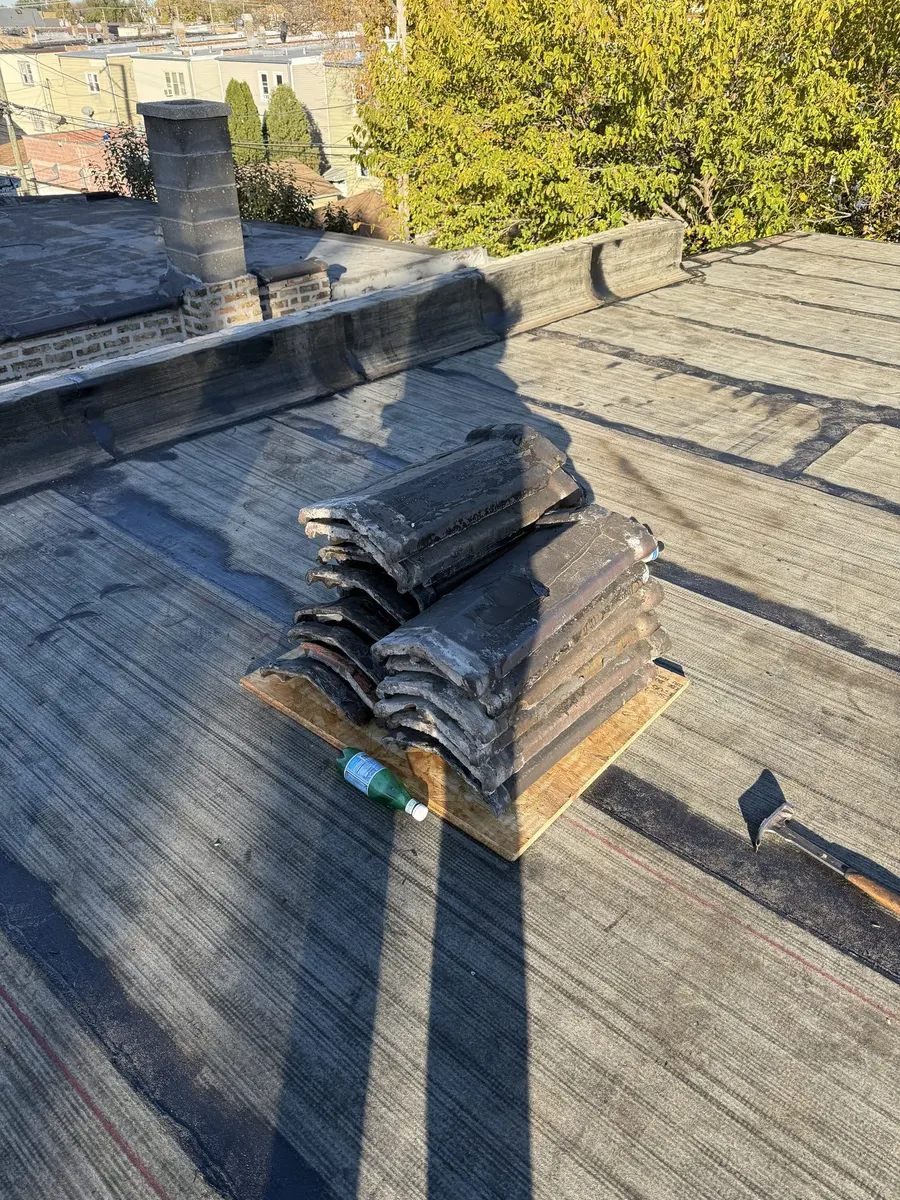
The weakest point on a Chicago flat roof is almost never the middle of the field. It is the edge, where the roof meets the parapet. If the membrane is simply run up the wall and tucked under the existing copings, water finds the joints in the clay and the mortar and gets behind the flashing. Pulling the copings, running the base flashing up and over the wall, then resetting the copings is slower and it is the step that keeps the roof dry at the edge for the life of the membrane. You can see them stacked in the photos, numbered so they go back where they came from.
Why there is a coating on top
Inside the City of Chicago a replacement low-slope roof has to meet a solar reflectance standard, and a standard dark cap sheet does not pass it. The reflective aluminum coating over the finished mod bit is what brings the roof into compliance, and it also takes the summer surface temperature down, which the membrane and the second-floor tenants both notice. We wrote about the rule in Chicago's cool roof rule.
Why November works for this
Modified bitumen is torch-applied, and the rule is dry deck and temperatures that let the asphalt flow and bond. Chicago in the second week of November gave us sun and the mid-forties, which is fine. What does not work is snow on the deck or a cold snap in the twenties, so a job like this is sequenced to close the roof in within the working window, and the crew does not open more roof than it can cover the same day.
How the job was priced and run
The owner received a written, itemized proposal in October: tear-off, insulation, base and cap, copings, gutter, coating, disposal and permit on separate lines, with a fixed price and a 30/30/40 payment schedule, nothing due until signing. Progress photos go to the owner as the work moves. Same owner on the roof who quoted the job. That is how every Leaders Roofing job runs, on a Chicago two-flat or a North Shore estate.
Have a flat roof in Chicago?
Two-flats, three-flats, bungalow additions, garages and small commercial buildings all carry roofs like this one, and most were last done twenty or more years ago. If yours is patched, ponding or past its date, call (708) 847-5418 or send a note. We will look at it, photograph what we find, and tell you plainly whether it needs work this year. Illinois Roofing Unlimited License #104.010248, City of Chicago General Contractor Class E. For pitched-roof bungalows, see what a Chicago bungalow roof replacement includes.
Frequently asked questions
How long does a flat roof replacement on a Chicago two-flat take?
Typically three to six working days for a roof this size, depending on how much deck repair turns up after tear-off and on the weather. The crew only opens as much roof as it can close the same day, so a rain delay pauses the job rather than exposing the building.
Does a Chicago two-flat roof replacement need a permit?
Yes. A roof replacement inside the City of Chicago needs a City permit, and the contractor needs a City of Chicago General Contractor license. Leaders Roofing holds Class E license TGC147129 and files the permit as part of the job.
What does a modified bitumen roof cost on a Chicago two-flat?
Most two-flat and three-flat flat roof replacements we do fall in the $25,000 to $75,000 range our commercial and flat work runs to, with the building size, insulation, parapet and coping work, gutters and the reflective coating setting where in that range a given roof lands. Every proposal is itemized so you can see what each part costs.